Why do deer flies track your movement and heat?
Deer flies are visual hunters that rely heavily on sight to locate warm-blooded hosts. When you walk across your lawn, ride a mower, or garden, the physical motion catches their attention from a distance. They are programmed to follow moving silhouettes because movement usually indicates a living animal.
As they get closer, your body heat and the carbon dioxide you breathe out guide them in. Deer flies tend to target the highest point of a moving host, which is why they persistently buzz around your head, neck, and shoulders. Unlike mosquitoes that sneak up quietly, deer flies use bold, direct pursuit.
- Fast-moving objects like running pets or lawn equipment quickly draw their focus.
- Exhaled breath and natural perspiration create a scent trail they follow across the yard.
- Body warmth confirms to the fly that it has landed on a living blood source.
Does nearby water bring deer flies to your property?
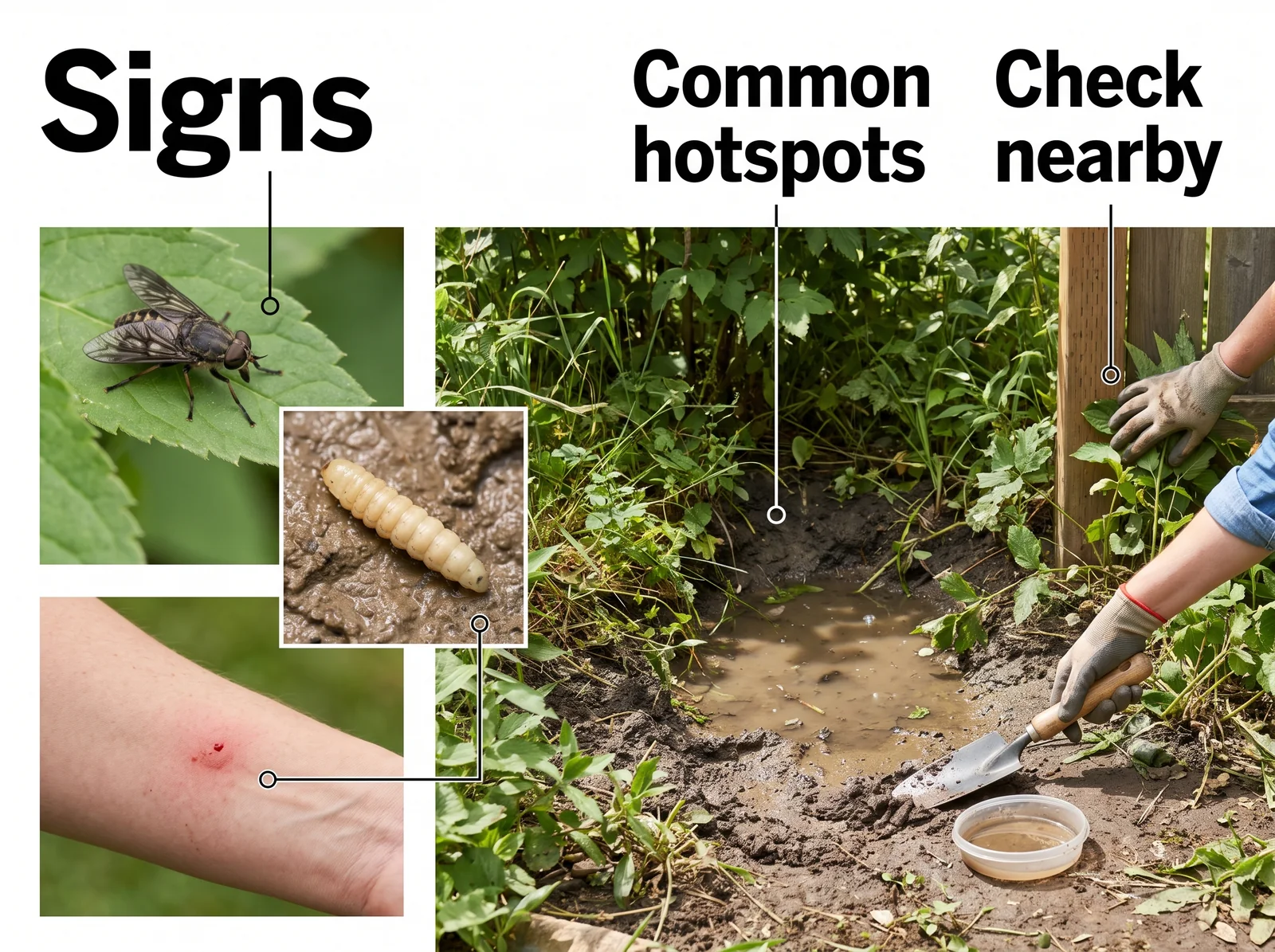
Water sources are essential for the deer fly lifecycle. Female deer flies lay their egg masses on vegetation hanging directly over or growing out of standing water, wet soil, and marshy ground. When the eggs hatch, the larvae drop into the damp mud to feed and grow.
If your property borders a pond, stream, drainage ditch, or swampy woodlot, you will naturally see more deer fly activity. Even small areas of poor drainage, saturated garden beds, or unmaintained retention ponds can support breeding sites near your living spaces.
How do clothing colors and dark objects attract them?
Visual contrast plays a major role in how deer flies pick their targets. Research and field trapping consistently show that deer flies are drawn to dark colors, particularly shades of blue, black, brown, and deep red. A dark shirt creates a sharp silhouette against the sky or greenery.
Dark-colored patio furniture, dark vehicles, and dark-coated dogs also attract these pests. If you wear dark clothing while doing yard work, you make yourself far more visible to hunting females than if you wear light-colored attire.
- Navy blue and royal blue are among the strongest visual attractants for deer flies.
- Dark hats give deer flies a clear target right at head level.
- Light neutral tones like tan, white, and pale yellow help you blend into the background.
Do outdoor pets and local wildlife draw deer flies closer?
Your yard might be attracting deer flies simply because other animals frequent the area. Deer, horses, cattle, and wild mammals are the preferred natural hosts for these insects. When deer cross through your lawn or bed down nearby, deer flies follow the herd.
Domestic pets like dogs and outdoor cats also emit heat, carbon dioxide, and movement that attract hunting flies. Once deer flies arrive in search of animal hosts, they readily switch their attention to any person stepping onto a patio or deck.
Why are deer flies worse in shady, wooded yard edges?
Deer flies thrive along transitional zones where open sunny lawns meet dense woods, brush, or tall weeds. Adult flies often rest in low shrubs, tall grasses, and tree canopies during the heat of the day, waiting for a host to pass by.
Properties with thick underbrush, unmanaged tree lines, and overgrown property borders provide ideal resting cover and wind protection. When you walk past these shaded edges, resting flies immediately take flight to pursue you across open grass.
What landscape features can you modify to reduce attraction?
While you cannot eliminate every environmental cue, modifying your yard layout helps reduce deer fly pressure. Keeping grass trimmed short eliminates temporary resting spots near high-traffic family areas. Thinning dense brush along property lines allows sunlight and wind to penetrate, making the habitat less appealing.
Improving drainage in low-lying spots reduces the saturated soil that larvae need to survive. While natural wetlands cannot always be altered, clearing clogged ditches and maintaining clean pond borders limits dense emergent weeds where adults lay eggs.
- Mow lawns regularly and cut back tall ornamental grasses near patios.
- Clear brush piles and trim low tree branches along woodland edges.
- Regrade soggy soil patches to prevent standing water after heavy rains.
How can you use their natural attraction to trap them?
Because deer flies are strongly drawn to visual cues and motion, you can use specialized mechanical traps to reduce localized numbers. Trolling traps and blue sticky patches placed on hats or moving garden carts exploit their natural attraction to dark moving objects.
Sticky blue spheres hung in sunny openings between woods and your yard can catch hunting adults before they reach your patio. Since standard chemical sprays rarely provide lasting control against strong-flying outdoor pests, physical interception using their own instincts works far better.
Questions you may still have
Do deer flies breed indoors or enter homes on purpose?
Deer flies do not breed indoors and rarely enter homes on purpose. They need natural wetland soil and open sunlight to complete their lifecycle. When one ends up inside, it usually slipped in through an open door while chasing a person or pet. They typically fly toward bright windows and die within a day.
What time of day are deer flies most attracted to activity?
Deer flies are active during daylight hours, especially on warm, humid days with low wind. Peak hunting activity often happens during mid-morning and late afternoon, though direct summer sunlight can keep them active all day. They do not hunt at night, as they rely heavily on visual cues to find hosts.
Do standard mosquito repellents keep deer flies from being attracted to you?
Standard mosquito repellents have limited effectiveness against deer flies. While high-concentration DEET or picaridin may reduce direct bites on treated skin, it often fails to stop them from buzzing aggressively around your head. Physical barriers, such as wide-brimmed light hats, head nets, and sticky patches, provide more reliable personal protection.