How should you protect yourself right away?
Your very first action should be covering up before more flies lock onto your location. Deer flies use visual movement and body heat to find you, and they usually target the head, neck, and shoulders. Putting on a wide-brimmed hat, pulling up your collar, and tucking your pants into your socks eliminates their favorite landing spots immediately.
If you are caught in a heavy swarm, walk briskly toward an enclosed porch, vehicle, or indoor room. Swatting frantically often attracts more flies because the extra motion and carbon dioxide draw their attention. Once inside, check your clothing and hair, as these pests frequently hitch rides on fabric and enter homes unnoticed.
- Put on light-colored, tightly woven long sleeves and pants.
- Wear a brimmed hat or head net to guard your scalp and face.
- Move smoothly indoors without wild arm swinging.
Why are deer flies targeting your area?
After securing yourself, look around your landscape to understand why the flies are present. Female deer flies require a blood meal to produce eggs, and they thrive near damp, semi-aquatic habitats. If your property borders a pond, stream, marsh, or heavily wooded wetland, adult flies are likely wandering into your yard to feed.
They are most active on warm, sunny days with little wind, especially from late spring through mid-summer. Recognizing that their presence is tied to moisture and weather helps you plan your outdoor chores around their peak feeding hours rather than fighting a losing battle mid-day.
How do you confirm you are dealing with deer flies?
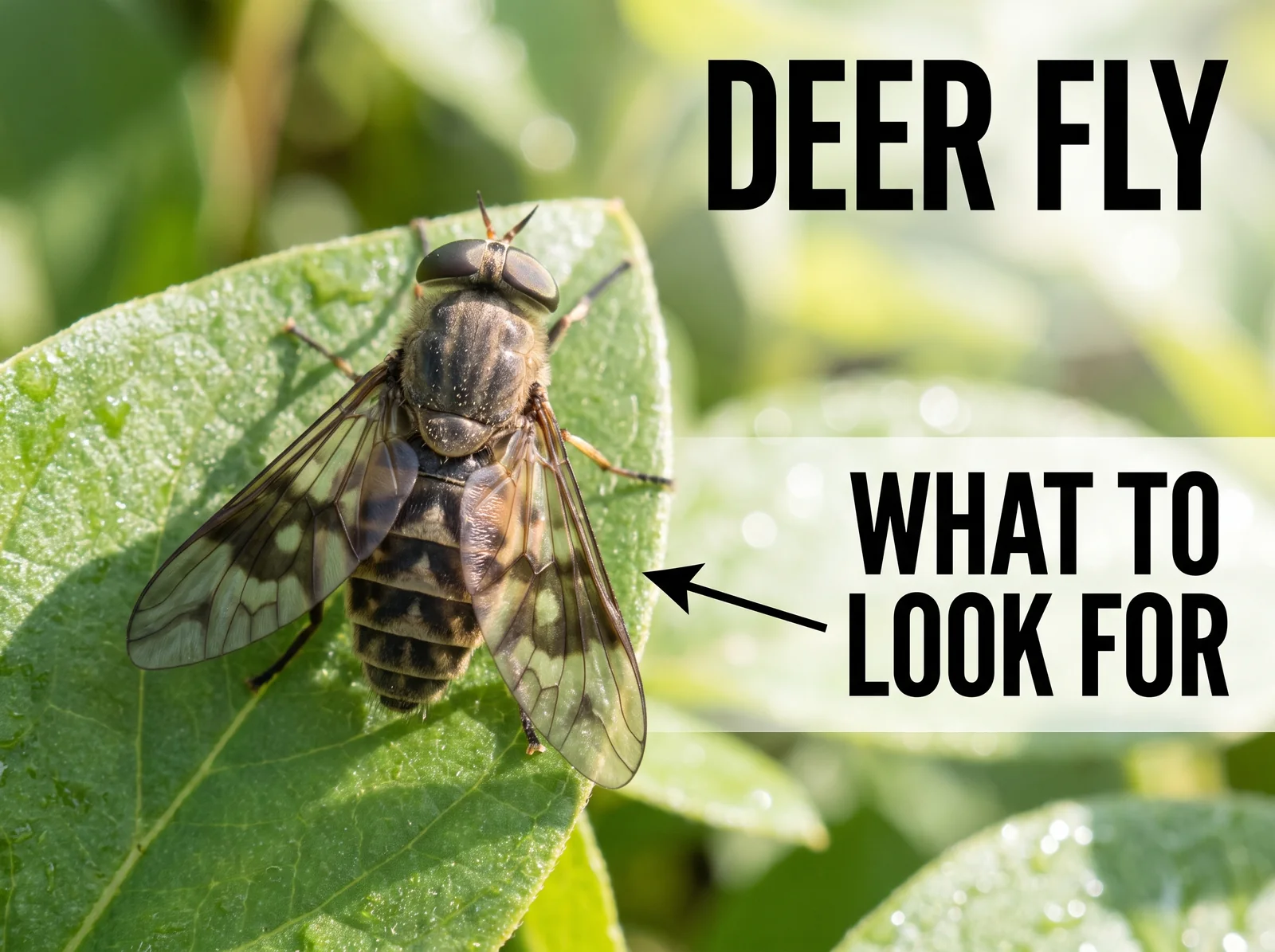
Before choosing long-term controls, verify the pest. Deer flies are slightly larger than house flies but smaller than horse flies, typically measuring about a quarter to a half inch in length. They feature distinctive patterned wings with dark bands or smoky patches and often have striking, brightly colored eyes.
Their flight pattern is another giveaway. Unlike house flies that buzz erratically around food, deer flies circle persistently around your head and make direct, fast landing attempts on your skin or hair. Confirming these traits ensures you do not waste time on treatments designed for other flying insects.
What immediate physical barriers can you use?
Because deer flies fly during daylight hours, physical exclusion works extremely well for quick relief. Inspect all window and door screens around your home, patio, or gazebo to ensure there are no small tears or loose frames that allow stray flies to slip inside while following you.
If you must stay outside in your garden or yard, portable screened canopy tents provide an instant fly-free zone. Electric fans also create steady air currents on decks and patios, which easily disrupts the flight path of these pests and prevents them from landing comfortably.
- Patch holes in porch screens and window mesh.
- Set up oscillating outdoor fans on seating areas to deter landings.
- Use fine-mesh head nets when working in heavy vegetation.
Can sticky patches and traps help immediately?
Sticky adhesive patches designed for hats are one of the most effective immediate tools for deer fly defense. Because the flies naturally home in on the highest moving point of your body, placing a specialized adhesive strip on the back or top of a cap catches them the moment they land.
You can also deploy visual sticky traps around the perimeter of your active yard space. Blue or black objects, such as plastic cups or inflated balls coated with non-drying insect adhesive and hung from branches, attract deer flies through movement and dark contrast, capturing adults without releasing chemicals.
What landscape adjustments should you make next?
Once immediate defenses are active, evaluate your yard maintenance. Deer flies rest in tall grasses, dense brush, and shaded foliage along property borders when they are not hunting. Mowing tall grass and clearing overgrown weed patches near living spaces removes their sheltered resting areas.
Keep in mind that altering natural wetlands or running water is rarely practical or legal, so focus on trimming back overgrown vegetation immediately adjacent to your home, walkways, and recreational zones to let in more sunlight and wind.
When should you consider professional help?
Large-scale chemical spraying is rarely recommended for deer flies because their aquatic larvae live dispersed in protected wetland mud where sprays cannot safely reach. Widespread outdoor spraying also harms beneficial pollinators while offering little lasting control against incoming adult flies.
If deer fly pressure makes your outdoor space completely unusable despite exclusion, trapping, and physical barriers, consult a licensed pest professional. An expert can evaluate local site conditions, ensure compliance with environmental regulations around waterways, and recommend targeted monitoring strategies.
Questions you may still have
Do ordinary bug zappers work on deer flies?
No, standard ultraviolet bug zappers are ineffective against deer flies. Deer flies hunt visually during the day using movement, dark silhouettes, and carbon dioxide cues rather than light. Zappers primarily kill harmless nocturnal insects and beneficial bugs instead of daytime biting flies.
Why do deer flies circle around your head specifically?
Deer flies naturally focus on the highest silhouette of a host, which on humans is the head and neck. They are also drawn to the carbon dioxide you exhale and the warmth of your scalp, making head nets and hat-mounted sticky patches particularly effective defenses.
How long does a typical deer fly season last?
Peak deer fly activity usually lasts between four and six weeks, typically during early to mid-summer. While individual adults live for several weeks, total activity drops sharply once hot, dry late-summer conditions arrive or when emerging populations complete their breeding cycle.