Where do deer flies lay their eggs?
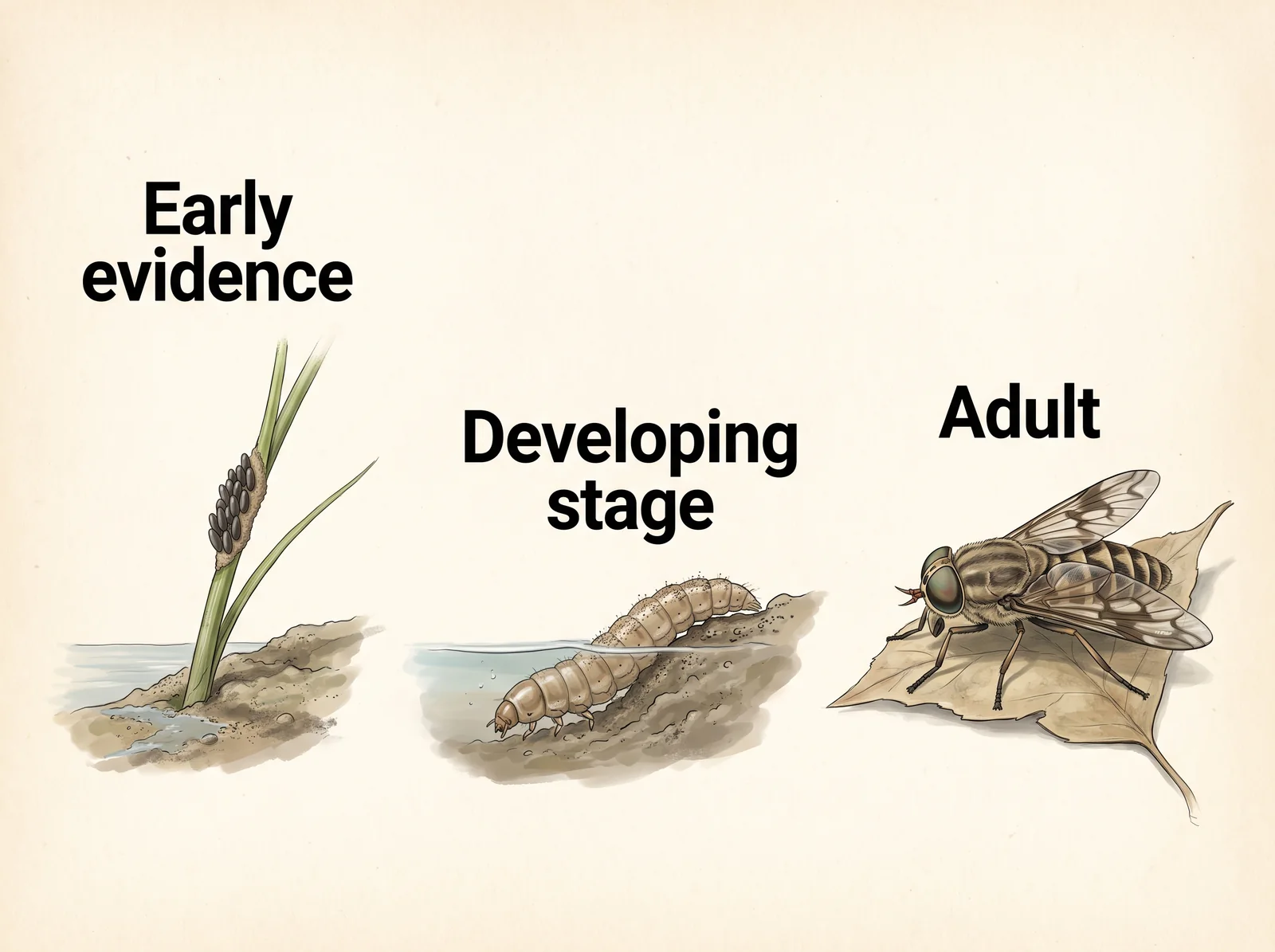
Adult female deer flies seek out moist environments to lay their egg masses. They typically choose the stems and undersides of emergent aquatic plants, cattails, and low-hanging vegetation directly above saturated soil or slow-moving water.
Once the eggs hatch, the tiny larvae drop into the wet mud below. These larvae live in semi-aquatic substrates, damp marshes, muddy stream edges, and boggy woodland pockets where they prey on other small invertebrates and organic matter before pupating.
Why is eliminating deer fly breeding grounds difficult?
Unlike house flies or mosquitoes, deer flies do not breed in small buckets or stagnant puddles that you can simply tip over. Their preferred habitats are expansive, natural wetlands, drainage swales, and wooded stream banks.
Because these ecosystems are often vast and legally protected, you cannot simply drain or excavate every damp area near your property. In addition, adult deer flies can fly several miles from surrounding off-property marshes to search for blood meals.
How can you modify vegetation to discourage breeding?
You can make your property edges less inviting for egg-laying females by managing the plant growth along waterways and ditches. Trimming back dense, overgrown weeds and cattails eliminates the sturdy vertical surfaces females need to anchor their egg masses.
Keeping grasses cut short around pond perimeters increases sunlight and wind exposure. Drier, open ground makes the shoreline far less hospitable for newly hatched larvae trying to burrow into damp muck.
- Cut back overhanging brush and wild reeds along ditch banks.
- Maintain a cleared buffer zone between wild brush and active lawn areas.
- Remove dense patches of emergent water plants near your primary outdoor living spaces.
What water management steps reduce larval habitat?
Improving drainage in low-lying sections of your yard prevents the formation of constant boggy conditions that shelter larvae. Fill in persistent muddy ruts caused by vehicles or lawn equipment, and grade areas where downspouts discharge.
Keep drainage ditches, culverts, and swales free of fallen leaves and organic muck. Fast-moving, clear water with clean banks offers deer fly larvae fewer places to hide and feed compared to stagnant, silt-choked trenches.
How do physical traps help intercept emerging adults?
Since you cannot treat every natural wetland, trapping adults as they emerge from breeding zones is an effective management tool. Deer flies rely heavily on visual cues, specifically dark colors and movement, to find their hosts.
You can set up sticky black spheres, dark blue buckets coated with non-drying adhesive, or canopy-style biting fly traps between known marshy zones and your yard. Place these traps about three to four feet off the ground in sunny corridors to catch adult flies before they reach people and pets.
Can chemical treatments eliminate deer fly breeding sites?
Treating larval breeding grounds with broadcast chemicals is rarely feasible or recommended. Applying broad-spectrum pesticides to natural wetlands or streams can cause severe ecological harm to beneficial aquatic organisms, fish, and wildlife.
If you decide to use chemical control for resting adult flies on surrounding ornamental foliage, select only an EPA-registered product specifically labeled for the target pest and site. Always read and follow every instruction on the product label regarding application methods, buffer zones around waterways, and personal protection.
When should you call a pest management professional?
If severe biting fly swarms make your property unusable throughout the summer months, a professional inspection can help. A licensed specialist can accurately identify the fly species, locate major nearby breeding grounds, and determine if on-site environmental modifications are practical.
Professionals also understand local environmental regulations regarding water management and wetland protection. They can design an integrated management plan that pairs physical barriers and specialized traps with compliant landscape maintenance.
Questions you may still have
Do mosquito larvicides like Bti work on deer fly larvae?
No, standard mosquito dunks containing Bacillus thuringiensis israelensis (Bti) are formulated for mosquito and blackfly larvae feeding in open water. Deer fly larvae live buried inside dense mud, wet moss, and organic debris along wetland banks, where surface water treatments cannot reach or affect them.
How far will deer flies travel from their breeding source?
Deer flies are strong fliers and can easily travel one to two miles from their larval wetland habitat in search of a blood meal. While managing moisture on your own property helps, nearby wooded swamps or unmanaged neighbor properties can still generate active adult populations.
What time of year do deer fly breeding sites become active?
Egg laying and larval emergence typically peak from late spring through mid-summer, depending on your climate and local temperature. Larvae overwinter in damp soil and complete their development into pupae as soils warm up in late spring, leading to sudden adult activity.