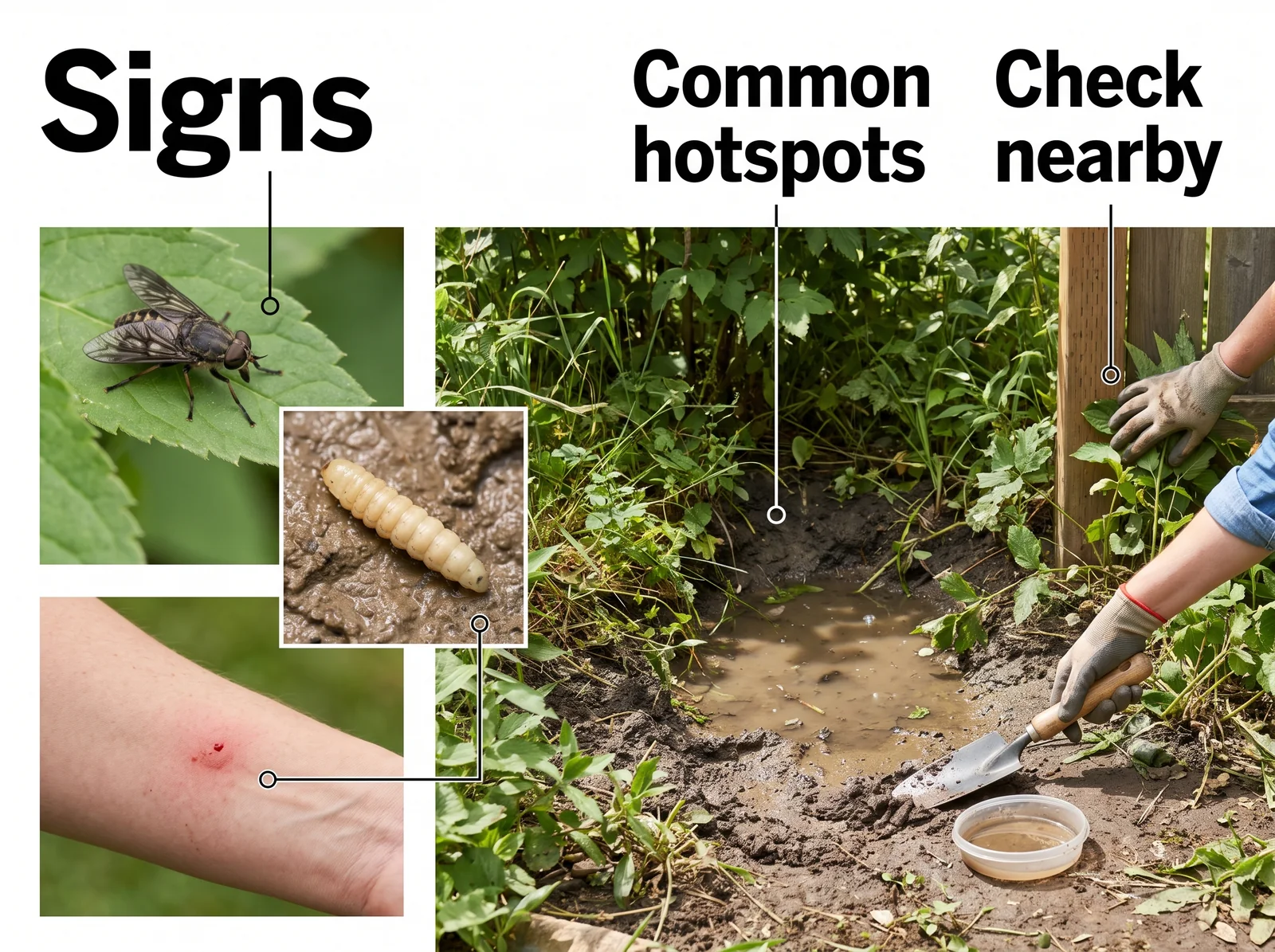
Why do deer flies seek shaded cover?
Deer flies are daytime hunters, but they cannot stay in continuous flight without burning critical energy and losing body moisture. Like many biting insects, they need cool, humid environments to survive between feeding flights. Direct, mid-afternoon sun dries them out quickly, so they withdraw into thick plant canopies to conserve hydration.
Resting in sheltered cover also protects them from natural predators such as dragonflies, birds, and larger predatory insects. When you walk past their resting areas, the shift in light, carbon dioxide from your breath, and physical motion quickly trigger them to leave their perches and attack.
What natural landscape features do they prefer?
Wetlands, marshes, swamps, and sluggish streams are the primary natural habitats for deer flies. The adult females lay their eggs on emergent vegetation growing directly over muddy banks or shallow water. As a result, the flies rarely wander more than a mile or two from these aquatic breeding grounds.
Dense forest borders that line ponds or drainage ditches serve as prime staging areas. Deer flies rest on the undersides of leaves, hanging branches, and tall reeds. If your property borders natural wetlands or heavily wooded swamps, you will notice significantly higher populations lurking along those natural transition zones.
Where do deer flies hide in your yard?
Around residential yards, deer flies gravitate toward unmanaged vegetation and shaded perimeter zones. Overgrown ornamental grasses, dense privacy hedges, and wild brush piles provide the exact microclimate they need to stay protected during midday heat waves.
They frequently settle in low-hanging tree canopies, shaded mulch beds near garden irrigation, and along un-mowed property lines. If you have a backyard water feature, a poorly drained ditch, or rain garden, adult deer flies will often use surrounding plants as daytime perches while waiting for hosts to walk past.
- Uncut grass and weed lines along fencing
- Damp mulch and soil beneath thick shrub borders
- Undersides of broadleaf plants near water sources
- Shaded tree lines adjacent to open lawn areas
Do deer flies hide indoors or inside structures?
Deer flies rarely enter indoor spaces intentionally because they depend entirely on outdoor hosts and natural wetland environments. When one does end up inside your home, shed, or garage, it usually flew in accidentally while actively tracking you or a pet through an open door.
Once trapped inside, deer flies do not hide in dark crevices like bed bugs or roaches. Instead, they fly toward bright windows and glass patio doors attempting to reach the sun. Because they cannot feed, reproduce, or find proper moisture indoors, they quickly exhaust themselves and die within a day or two.
How do weather conditions change where they hide?
Weather has a direct impact on deer fly activity and hiding behavior. On windy days, these pests struggle to fly in open fields, forcing them to remain deep inside dense brush and low-lying shrubs where wind speeds are minimal.
During heavy rain or unusually cool mornings, they remain completely dormant under broad leaves and dense ground cover. However, on warm, muggy, overcast days with still air, deer flies leave their hiding spots in large numbers, making bites far more frequent across open lawn areas.
How can you locate their hiding zones on your property?
Finding active hiding spots requires careful visual inspection along property edges during calm, warm hours. Walk slowly along the boundary between your manicured lawn and wild brush, watching for sudden insect movement near knee-to-waist height.
You can also use physical monitoring tools, such as slow-moving dark decoy shapes or blue sticky patches attached to hats and garden stakes. When you move near suspected resting zones, deer flies will quickly emerge from the vegetation and swarm around the moving object, confirming their hideout.
How does habitat management reduce their hiding areas?
Modifying your landscape makes your property far less hospitable to resting deer flies. Keeping grass closely cut and clearing overgrown brush along fence lines removes the dense, humid ground cover they rely on during the day.
Trimming lower branches from perimeter trees allows more sunlight and air circulation to penetrate the yard, drying out damp resting zones. While you cannot drain protected public wetlands, eliminating unnecessary standing water and thinning backyard vegetation significantly pushes deer fly resting activity further away from your living spaces.
Questions you may still have
At what height do deer flies usually rest in vegetation?
Deer flies typically rest between one and six feet above the ground. They prefer the undersides of leaves on low shrubs, tall marsh weeds, and lower tree branches where humidity remains high and they can quickly launch toward passing large mammals.
Do deer flies hide in leaf litter during winter?
No, adult deer flies do not overwinter in leaf litter. Adults die off before winter, while their larvae hide and develop deep within wet mud, aquatic vegetation, and organic matter at the edges of ponds and marshes until spring.
Can deer fly larvae hide in ordinary garden soil?
Deer fly larvae require saturated, semi-aquatic substrates to survive. They hide in wet marsh mud and pond edges rather than dry or moderately moist garden soil, meaning standard flower beds will not support larval development.