What types of habitats do deer fly larvae need?
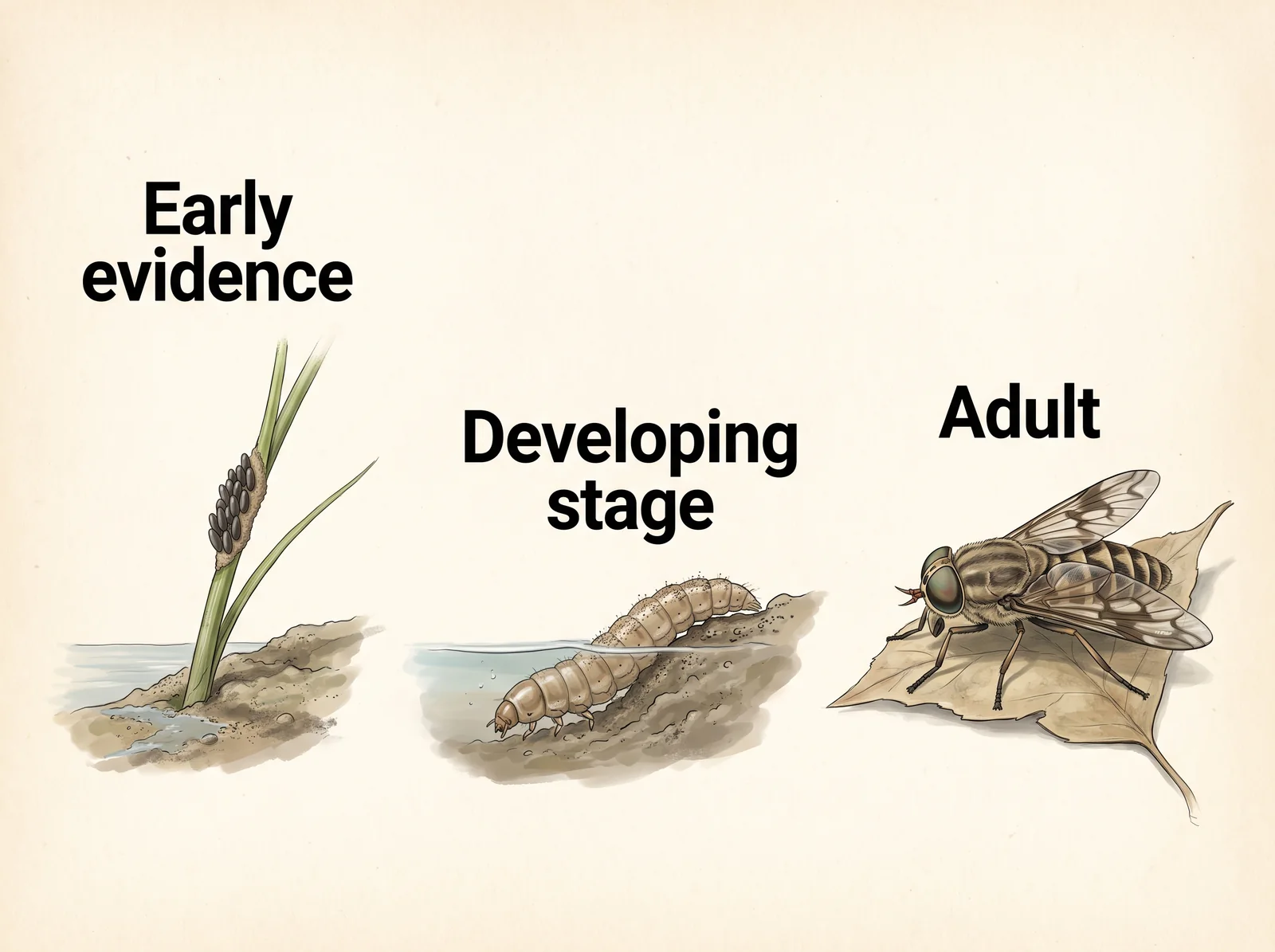
Deer fly eggs and larvae require constant moisture to survive. Female deer flies deposit clusters of dark eggs on the leaves of plants that overhang standing or slow-moving water. When the eggs hatch, the tiny larvae drop straight down into the saturated mud below.
Unlike house flies or mosquitoes, deer flies do not develop in dry trash, compost piles, or birdbaths. They need damp organic muck, stream banks, wetland edges, or the soft silt along forest swamps. Understanding this semi-aquatic need narrows your search significantly.
- Cattail-lined edges of farm ponds or retention basins
- Muddy banks along slow creeks and drainage canals
- Shaded forest swamps, bogs, and vernal pools
- Wet pastures with low-lying, waterlogged soil
How far will adult deer flies travel from breeding sites?
When adult deer flies emerge, their primary goal is mating and securing a blood meal. Strong fliers by nature, females routinely travel a quarter-mile to over a mile away from their native wetland to hunt for hosts. This flight range explains why you might find severe activity around a dry patio or upland garden.
Because of this range, the actual breeding site might not sit directly inside your property lines. You should examine aerial maps of your neighborhood to identify marshes, beaver ponds, or wooded drainages located within a half-mile radius of your outdoor living spaces.
Which specific plants indicate potential breeding grounds?
Vegetation offers strong visual clues when you map out potential breeding areas. Female deer flies specifically select aquatic and semi-aquatic emergent plants as egg-laying platforms. These plants provide shelter, shade, and direct access to underlying mud when the eggs hatch.
Look for areas dominated by cattails, sedges, rushes, pickerelweed, and water lilies. If you notice these plants standing in shallow water or thick silt, you have found prime real estate for egg deposition. Dense brush along shaded waterways also serves as daytime resting and laying cover.
How can you inspect wet soil for developing larvae?
Confirming active breeding involves sampling the upper few inches of damp substrate along water margins. Deer fly larvae are cylindrical, segmented, and tapered at both ends, usually off-white, yellowish, or greenish-brown. They prey on small aquatic worms, insect larvae, and decaying organic matter.
To inspect a site, take a garden trowel and lift a shallow scoop of shoreline mud. Place the sample into a light-colored shallow tray or bucket of water. Swirl the mud gently to wash the silt away from the debris, then check for active, wriggling larvae floating or crawling along the bottom.
When is the best time of year to locate active sites?
Larval development takes nearly an entire year, but egg-laying and adult emergence peak during late spring and mid-summer. Inspecting potential breeding areas during sunny, warm mornings between late May and July yields the most visible evidence of adult and egg activity.
During this window, look closely at the undersides of leaves hanging over water for shiny black or brown egg masses. If you spot female flies repeatedly landing on emergent reeds and curving their abdomens, you are witnessing active reproduction in real time.
What man-made features create accidental breeding areas?
Natural wetlands are not the only culprits. Human development and landscaping often create accidental breeding zones that sustain large populations. Stormwater runoff basins, blocked culverts, and agricultural drainage ditches frequently collect silt and stagnant moisture, mimicking natural wetlands.
Check your property for persistent puddles along unpaved driveways, cattle troughs that leak into surrounding soil, or poorly graded swales that hold water for weeks. Correcting these drainage flaws helps eliminate localized breeding grounds right next to your home.
- Unmaintained roadside ditches clogged with silt and weeds
- Erosion control swales that stay permanently muddy
- Over-irrigated landscaping borders next to shaded woods
- Overflow zones around livestock water tanks
Why is eliminating deer fly breeding zones challenging?
Locating breeding zones is straightforward, but modifying them can be complicated. Most deer fly breeding occurs in natural wetlands, protected marshes, or neighboring properties where altering the landscape or using chemicals is neither legal nor environmentally sound. Natural wetland ecosystems support critical wildlife and native plants.
Instead of trying to drain entire marshes, focus your efforts on managing artificial puddling, clearing excess weeds from private drainage ditches, and employing physical defenses like patch traps or moving target traps around your yard perimeter.
Questions you may still have
Can deer flies breed in standing water like mosquitoes?
No. Mosquitoes develop directly in open standing water, while deer fly larvae require saturated, muddy soil or organic muck along the water's edge. Emptying birdbaths or flowerpots stops mosquitoes, but it will not reduce deer flies.
Do deer flies lay eggs on dry land or in lawns?
Deer flies avoid dry soil and typical turfgrass because their larvae cannot survive without constant moisture. They only lay eggs on foliage overhanging wet mud, marshes, streams, or swampy borders.
How long do deer fly larvae stay in the mud before emerging?
The larval stage lasts between nine months and two years, depending on water temperature and food supply. Larvae spend the winter buried in deep mud and pupate on drier shoreline ground in spring before emerging as biting adults.