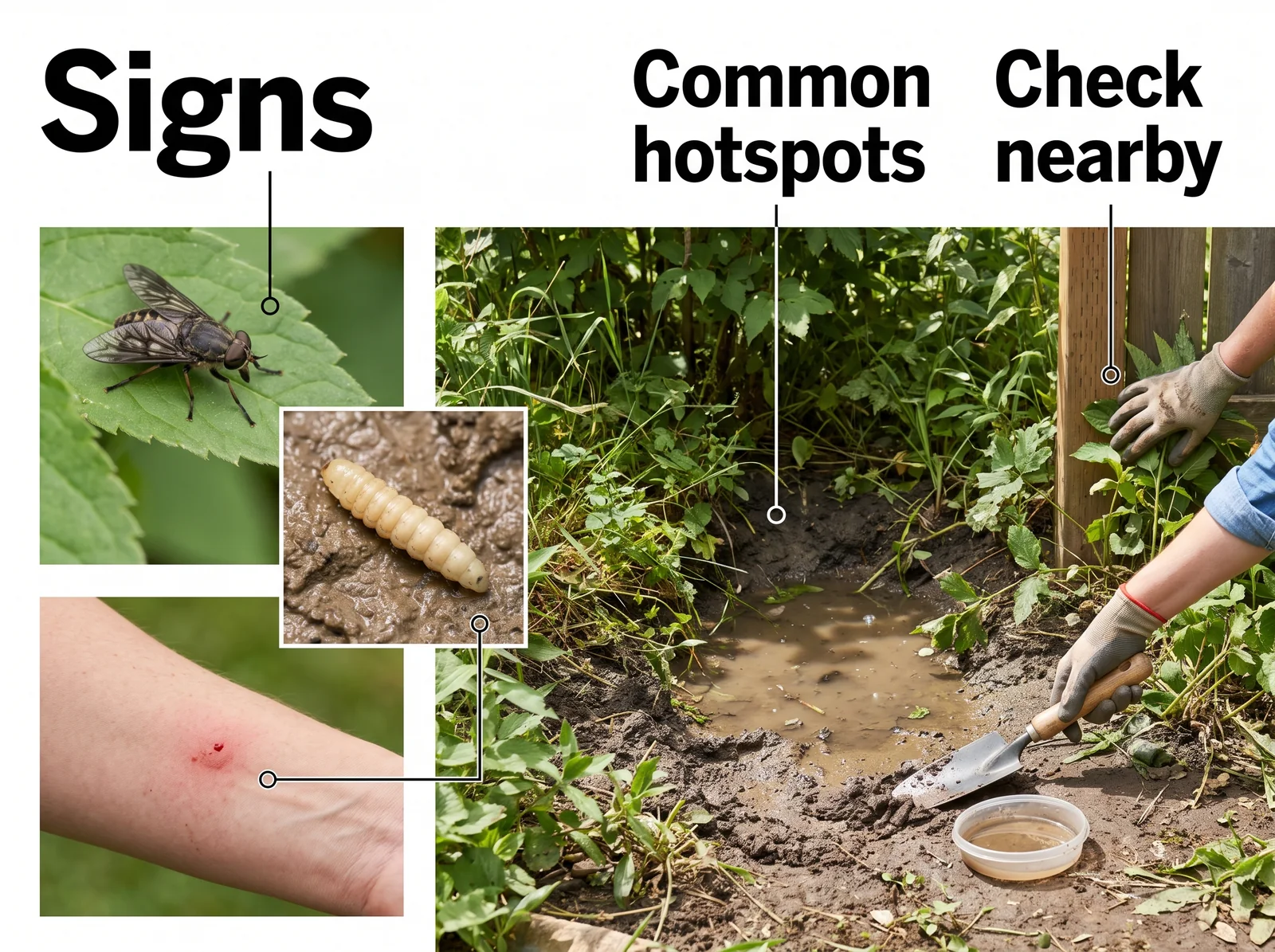
What natural environments produce deer flies?
Deer flies begin their life cycle in saturated, organic soil rather than open, deep water. Female flies lay eggs on vegetation directly overhanging marshes, swamp borders, creek banks, and low-lying ditches. When the eggs hatch, the larvae drop into the wet mud and decaying leaf litter beneath.
These larvae live as predators in the top layers of moist soil, feeding on small worms, insect larvae, and organic debris. Because they require consistent moisture to survive, dry lawns and open gravel driveways do not produce deer flies. Instead, any perpetually wet or poorly drained border on or near your land acts as a prime nursery.
- Shaded stream banks with thick reeds and grasses
- Permanent wetlands, bogs, and freshwater marshes
- Farm ponds with heavily vegetated, muddy shorelines
- Low woodland pockets that collect standing groundwater
How far do deer flies travel to find you?
You do not need a swamp in your immediate backyard to suffer from deer fly bites. Adult deer flies are strong, agile fliers capable of traveling one to two miles from their original wetland breeding grounds in search of food.
Female deer flies need protein from blood to develop their eggs, and they actively hunt across large open areas. They follow warm air currents, visual movement, and carbon dioxide plumes. If your yard sits anywhere within a mile of a natural watershed or wet conservation land, these pests will readily find you during their active flight periods.
Why are they suddenly appearing in your yard?
Deer fly populations often seem to explode overnight due to synchronized seasonal emergence. In most regions, pupae transform into winged adults during late spring and early summer when daytime temperatures consistently climb above seventy degrees.
Sunlight and outdoor activity also draw them right into your living space. Deer flies hunt by sight and prefer bright, sunny days with low wind. When you mow the lawn, work in the garden, or walk pets, your physical motion and body heat instantly pull nearby flies out of resting cover along tree lines.
Where do adult deer flies rest when not biting?
When female deer flies are not actively chasing hosts, they seek shelter in shaded, humid vegetation to conserve moisture and avoid midday heat exhaustion. Dense shrubbery, tall ornamental grasses, overgrown fence lines, and low-hanging tree canopies provide ideal resting zones.
Walking past these transition zones between woods and open lawn disturbs resting adults, triggering an immediate feeding response. Mapping out where your lawn meets tall brush helps you identify where flies are waiting before they target your family.
- Uncut brush along property borders and woodlots
- Tall weeds flanking drainage ditches and swales
- Dense garden beds adjacent to outdoor patios
Can standing water in your yard breed deer flies?
Homeowners often confuse deer fly breeding sites with mosquito breeding spots. While mosquitoes thrive in small containers like birdbaths, clogged gutters, and discarded tires, deer flies cannot develop in shallow, stagnant puddles with artificial edges.
Deer fly larvae require natural, muddy sediment rich in organic matter. However, poor property drainage that creates permanent, muddy bogs in your yard can support them. Fixing chronic drainage problems reduces potential habitat, but eliminating small containers alone will not lower deer fly numbers.
How can you identify their exact entry paths?
Tracking how deer flies enter your outdoor living area helps you place barriers and traps where they do the most good. Watch the flight lines on calm, sunny mornings. Deer flies generally travel along natural corridors, such as woodland edges, hedgerows, and open paths between tree stands.
Sticky patch traps attached to hats or blue visual attractant traps placed along property borders can intercept incoming flies. Positioning physical traps between known wetland zones and your main patio catches biting females before they reach high-traffic recreational areas.
What practical steps reduce their numbers around your home?
Because deer fly breeding habitats are wide and often protected natural wetlands, direct larval elimination is rarely feasible or legal. Management focuses instead on exclusion, habitat grooming, and physical interception around your immediate property lines.
Keep perimeter brush trimmed and mow lawn edges tightly against wooded boundaries to remove shaded resting zones. When spending time outdoors during peak weeks, wear light-colored clothing, wide-brimmed hats with adhesive patches, and utilize outdoor fans on decks to disrupt their flight abilities.
Questions you may still have
What time of day are deer flies most active?
Deer flies are daytime hunters that peak during mid-morning and late afternoon on warm, sunny days. They rarely fly at night or during heavy winds and cool rain. Planning outdoor chores during early morning or twilight hours significantly lowers your risk of encountering active biters.
Why do deer flies circle around human heads?
Deer flies are visual hunters drawn to the highest moving point of a target, as well as the carbon dioxide exhaled from your breath. Circling your head allows them to locate thin skin or hair margins where they can land and quickly make an incision to feed.
How long does deer fly season usually last?
The peak season is relatively short, typically lasting between three and five weeks in early to mid-summer. Once the adult generation completes its mating and egg-laying cycle, populations decline sharply until the next generation emerges from muddy wetland soils the following year.