Can deer flies actually live and reproduce inside plumbing?
True deer flies require natural, saturated outdoor environments to complete their life cycle. Female deer flies lay eggs on vegetation directly above mud, ponds, marshes, or damp stream banks. Once the eggs hatch, the predatory larvae drop into the wet soil or organic debris, where they feed on tiny aquatic organisms before pupating.
Because of these strict biological requirements, adult deer flies cannot breed inside municipal pipes, household p-traps, or garbage disposals. If an adult deer fly ends up around your drain, it likely wandered indoors through an open door, a torn window screen, or an exhaust vent, drawn toward the moisture and cool air of your sink.
Which pests are you likely seeing around your sinks?
When people find swarms of small, dark flies coming straight out of plumbing fixtures, the culprit is almost always an indoor drain pest rather than a deer fly. Drain flies, also known as moth flies or sewer flies, thrive inside the dark, gelatinous film that builds up along dirty pipe walls.
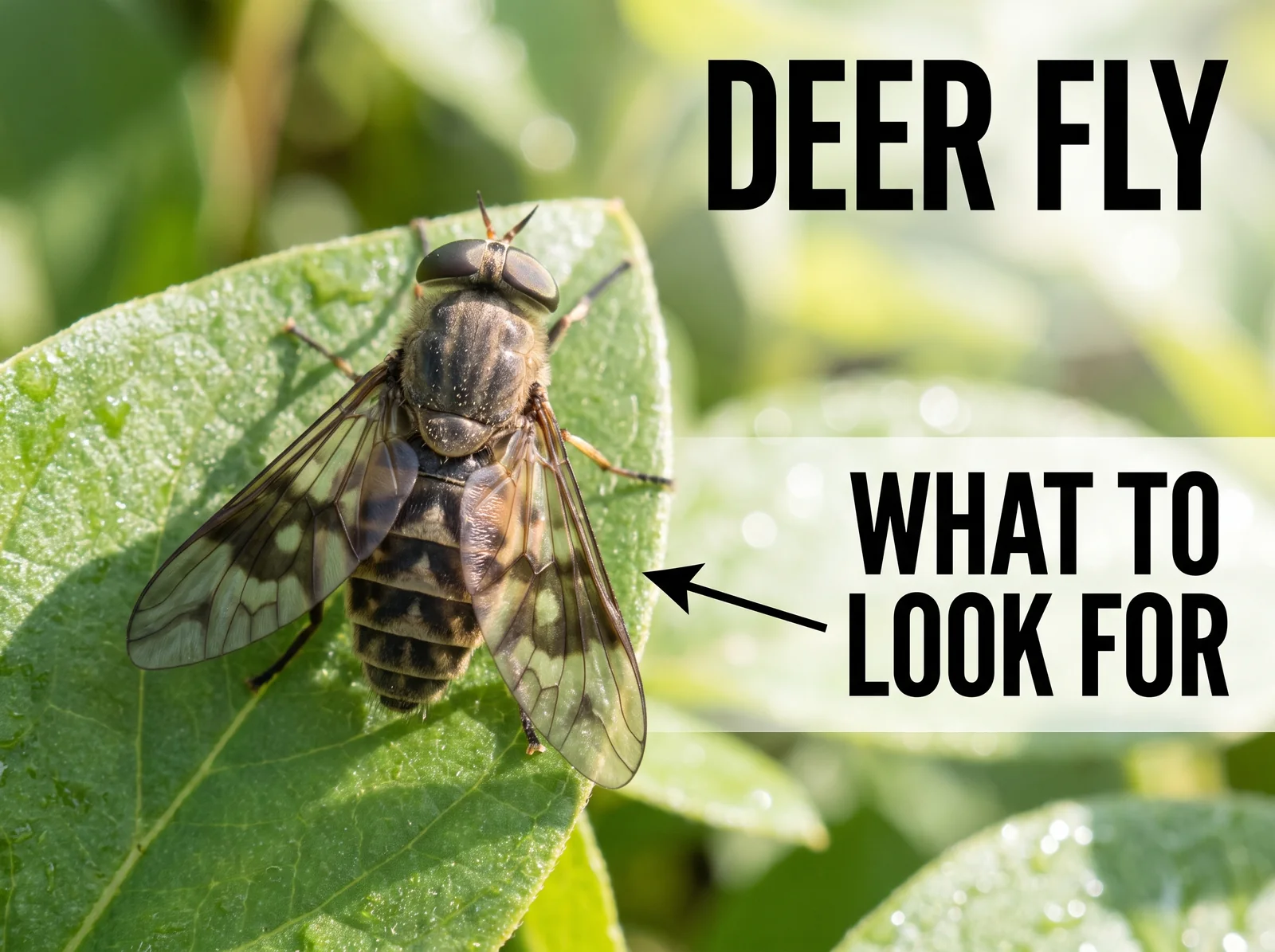
Other common invaders include fruit flies, phorid flies, and fungus gnats. Drain flies have fuzzy, broad wings that rest over their bodies like tiny moths, whereas deer flies are much larger, possess patterned or banded wings, and display prominent, brightly colored iridescent eyes. Taking a moment to examine the insect helps you target the correct problem.
How do you test your drain to identify the source?
Before applying any cleaning solutions, you can run a simple monitoring test to confirm whether flies are emerging directly from your pipes. Take a clear plastic cup or a piece of clear tape and place it over the opening of the drain before you go to sleep.
If you use tape, place it sticky-side down across part of the opening without completely sealing the airflow. Leave it overnight and inspect it in the morning. If insects are stuck to the tape or trapped inside the cup, you have true drain-breeding flies living in the pipe slime. If the trap remains empty, the flies are entering from outside your house.
How do you remove the organic buildup from your pipes?
To eliminate genuine drain-dwelling flies, you must remove the thick organic film where larvae feed and grow. Pouring ordinary boiling water or bleach down the drain rarely clears the heavy bacterial layer attached to pipe walls.
Use a stiff pipe brush along with an enzymatic drain cleaner designed to break down hair, soap scum, and decaying matter. Scrub thoroughly around the drain rim, the stopper mechanism, and as far down into the trap as the brush reaches. Flush the line with plenty of hot water to rinse away the loosened residue. Repeat this cleaning process for several consecutive days to eliminate hidden larvae.
How do you keep outdoor deer flies from entering your house?
If the insects in your home are true deer flies, your main goal is exclusion. Deer flies are strong fliers that hunt by sight, warmth, and carbon dioxide. They easily slip through damaged window screens, gaps around patio doors, and unsealed exterior vents.
Inspect all window and door screens for small tears or loose frames and repair them promptly. Install tight-fitting door sweeps on exterior entryways. If you have bathroom or kitchen exhaust vents that vent outside, ensure they feature functional backdraft dampers and fine mesh screening to prevent flies from riding air currents right into your home.
What outdoor sanitation steps reduce fly pressure near your home?
Reducing the deer fly population around your property helps prevent them from gathering near exterior doors and open windows. Focus on managing surface moisture and dense vegetation close to the house foundation.
Keep grass mowed short, thin out thick brush along property borders, and ensure landscape drainage directs standing water away from your foundation. For heavy outdoor infestations near wooded or marshy edges, specialized visual deer fly traps, such as sticky blue or black spheres placed in sunny flight paths, capture foraging adults before they reach your living spaces.
When should you inspect your septic system or crawl space?
In rare cases, persistent fly issues near bathroom or utility room drains indicate a cracked pipe or an unsealed cleanout line beneath your foundation. Leaking wastewater creates damp, organic-rich soil in crawl spaces that attracts various outdoor and semi-aquatic fly species.
Inspect under sinks for slow drips, check the crawl space for standing moisture, and verify that your plumbing vent stacks on the roof are unobstructed. If a pipe has cracked or a sewer line is venting improperly into a wall void, repairing the plumbing failure will eliminate the moisture source and solve the fly problem permanently.
Questions you may still have
Can pouring bleach down the sink kill deer fly larvae?
Pouring bleach down a sink will not solve the issue. True deer flies do not lay eggs inside plumbing, and bleach quickly washes past the thick organic slime where actual drain flies live. Instead of harsh chemicals, use mechanical brushing and an enzymatic drain cleaner to remove the biofilm inside your pipes.
Why do deer flies seem attracted to bathrooms and kitchens?
Deer flies are drawn to humidity, carbon dioxide, and reflective surfaces. When a fly wanders inside, it often seeks out humid areas like kitchens, laundry rooms, and bathrooms. They may land on porcelain sinks or mirrors, giving the false impression that they emerged directly from the drain line.
How can I tell a deer fly apart from a drain fly?
Deer flies are significantly larger, measuring roughly a quarter-inch to half-inch long, with distinct dark patterns across their wings and large, colorful eyes. Drain flies are tiny, usually around an eighth of an inch, with fuzzy gray or tan bodies and wings that look like miniature moths.